



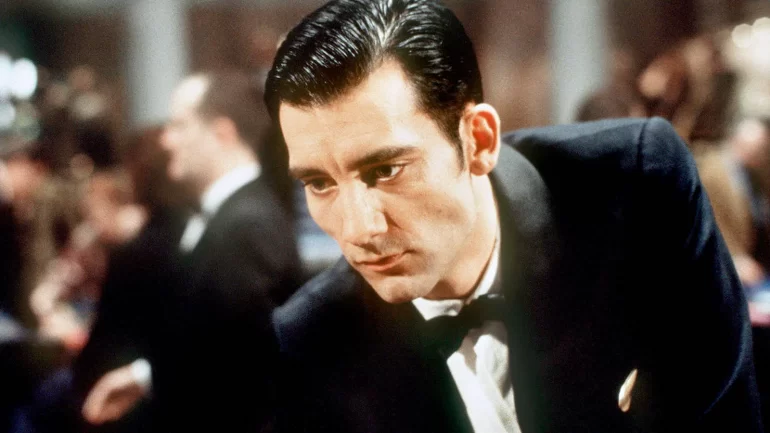
Some films get found straight away. Some get found ten years late, on a dodgy DVD a mate lends you with no case. And then there is Croupier, which basically had to be smuggled into the world sideways before anybody would admit it was any good.
It is a British film from 1998, directed by Mike Hodges, written by Paul Mayersberg, and starring a young Clive Owen back when nobody outside the UK had the faintest idea who he was. It is not an action film in the strict sense. Nobody kicks anybody through a window. But it is one of the coldest, most controlled crime pictures this country has produced, and if you like the mean end of the genre, the Get Carter end, you owe it a night.
The film that got away
The release history is genuinely mad. Croupier was made on about three million pounds. It drifted out to television in the Netherlands before it got any kind of proper cinema run, showed up in Singapore in mid 1998, then finally reached UK screens in June 1999, by which point everyone had lost interest. Distributors definitely did not know what to do with it. Too talky for a thriller, too nasty for a drama.
Then America saved it. Shooting Gallery picked it up and ran it as part of their film series in 2000, and critics over there went for it in a way British critics simply had not. Roger Ebert gave it three stars and wrote that it was “a convincing portrayal of one of those smaller London operations where the plush and the gilt on the gorillas at the door don’t quite cover the tarnish”, which is about as neat a description of the film’s texture as anyone has managed. You can still read Ebert’s original review and it holds up completely. On a three million pound budget it eventually took around seven million worldwide, which for a film that was more or less abandoned twice is not bad going at all.
Clive Owen before he was Clive Owen
This is the one. This is the film that made Clive Owen happen.
He plays Jack Manfred, a failed writer with a South African father who gambles and an ex-copper’s flat and no money, who takes a job dealing cards because there is nothing else going. And the performance is all withholding. Owen barely raises his voice for the entire runtime. He watches. He deals. He narrates his own life in the third person, because Jack is writing a novel about a croupier while he is busy being one, and the voice-over keeps slipping between the man and the character he is inventing out of himself.
Watch what happens to Owen’s career immediately after. Gosford Park, the BMW short films, The Bourne Identity, then Sin City, Inside Man, Children of Men, Shoot ‘Em Up. He was tipped for Bond for years on the back of this exact register, the sullen watchful thing. Hodges brought him back for I’ll Sleep When I’m Dead in 2003, which is the unoffical companion piece and also worth your time.
Alex Kingston is the other engine of the film as Jani, the gambler who pulls Jack into a robbery he has no business being anywhere near. Gina McKee plays Marion, the girlfriend who can see exactly what the job is doing to him. Kate Hardie is in there too. Everyone is playing about three degrees cooler than the scene technically requires and it works beautifully.
The house always wins, and Jack is the house
Here is why the film sticks, and why I would put it above most of the flashier casino pictures.
Almost every gambling movie is about the gambler. The guy on the run of his life, the bad beat, the last hand. Croupier is about the person on the other side of the table, the one who is contractually forbidden from playing, and it turns out that is a far more interesting job to dramatise. Jack’s whole discipline is not caring. He is not permitted to want anyone to win. He watches strangers destroy themselves at his table, night after night, and he has to keep his hands visible and his face flat and clear the chips away.
Mayersberg’s script, and he wrote The Man Who Fell to Earth so he knows a thing or two about alienation, treats the casino as a machine with a very simple appetite. The croupier is a component in it. That is the horror underneath the film, and it is way more unsettling than any of the plot mechanics.
And the plot does creak a bit, honestly. The robbery strand is the weakest thing in it and the ending relies on a coincidence that some people cannot forgive. Ebert’s point was that the plot is not really the point, the atmosphere is, and I think that is right. The film is about a room and what the room does to the people in it. It currently sits at a strong critical score on Rotten Tomatoes, which for a picture nobody would release is quietly satisfying.
Where it sits next to the rest
It is worth lining it up against its neighbours, because 1996 to 1998 was a weirdly rich patch for this stuff.
Scorsese’s Casino came in 1995 and went the other way entirely, three hours of empire and volume and Vegas as a kingdom. Paul Thomas Anderson’s Hard Eight arrived in 1996 and is the closest thing to a sibling, quiet and patient and interested in the mechanics of a small operator rather than the spectacle. Rounders landed in 1998, same year, and is basically the American answer to the same question, except it lets its hero love the game. That is the separate thing about Croupier. Jack is not allowed to love it. The film denies him the pleasure the audience has come for.
And then Casino Royale in 2006 took the poker table and made it a set piece with a body count attached, which is terrific and I am not knocking it, but it is the opposite instinct. Hodges films the table as work. Campbell films it as combat.
If you want the definitive version of the casino as a job rather than as a fantasy, this is it, and it has never really been bettered. Occassionally somebody tries. Mostly they end up filming the chips instead of the hands.
Hodges, twenty-seven years after Get Carter
Mike Hodges made Get Carter in 1971 and then spent decades being handed things that did not suit him, including Flash Gordon, which is great fun but is not remotely the same director. Croupier is him back on home ground. Grey London, dirty money, men with rules, and a total refusal to sentimentalise any of it.
The visual language is very deliberate. Overhead shots of the tables that look like surveillance footage. Hands, chips, shoes, cards going down. There is barely any music, just the occasional bit of room noise. Hodges shoots the croupier’s work as a repetitive manual process rather than as glamour, which is the exact opposite of what Hollywood does with a casino floor, and it is far more convincing for it.
The room has moved, mostly
Watching it now, the strangest thing is how much of the film is basically a period piece already. That specific world, the small London club with a membership rule and a dress code and a man on the door and cash on the baize, has largely gone. It got replaced by an app.
Most people who play these days do it on a phone on the sofa, and the games Jack spends the film dealing with, roulette, blackjack, punto banco, all sit in the same place now. UK sites like TheOnlineCasino.co.uk run the whole spread as a mobile casino, with live dealer tables streamed in so there is still a human turning the cards over, which is a genuinely odd echo of the film. TheOnlineCasino.co.uk is UK licensed and the live section is the bit that would confuse Jack Manfred the most, I think. Same job, same rules, no room. If you do have a go, treat it the way the film treats it, a fixed number you decide before you start.
The house edge has not moved a millimetre in the meantime. That part Croupier got permanently right.
Worth digging out
It runs about ninety-four minutes, which in the current climate feels like a gift. There is no fat on it. It is on Blu-ray, it surfaces on streaming services fairly regulary, and it is exactly the sort of film this site exists to shout about, a hard little British crime picture that got buried and refused to stay buried.
If you have only ever known Clive Owen as the guy from Children of Men, go back and see where the whole thing started. And if you have seen it before, watch it again for what Hodges does with hands. It is really the whole movie.
18+. Please gamble responsibly. BeGambleAware.org.