



The Red Dragon casino in Rush Hour 2 looks immaculate until James Carter starts causing trouble. Within minutes, the gaming room has become a playground for fights, mistaken identities and increasingly expensive destruction.
Very little setup is needed. There is money in plain sight, private areas behind the public tables and security staff watching the room. A casino can hold the characters in one building while still giving an action director several places to stage trouble. That flexibility is why the genre keeps returning to the same setting.
The building is ready for a heist
Before the robbery begins, viewers already know where the money is and who controls the room. Cameras cover the tables, staff-only doors lead deeper into the building and the vault sits beyond areas most visitors will never see. Ocean’s Eleven treats those obstacles as a puzzle. Danny Ocean’s crew studies the casino, interferes with its systems and moves through employee corridors while the public floor carries on as normal.
The robbery in Heist falls apart much earlier. Instead of spending the whole film inside the building, the characters are pushed onto a city bus, where the escape becomes cramped and unpredictable. The familiar robbery setup soon gives way to a confined chase that supplies much of the movie’s momentum. In both cases, the casino handles much of the early storytelling. The target is obvious, security is already in place and failure has a visible cost.
The screen version is larger than life
Clark County contained 90,182 slot machines in 2025, while Las Vegas welcomed 38.5 million visitors during the year. Real casino interiors hardly need help looking excessive, yet movies still push the image further. The tables are busier, the surveillance rooms darker and the vaults harder to reach.
Modern gambling is far less tied to one physical location and Casino.org in Canada shows how platforms, licensing and access vary between provinces. Online casinos offer a different kind of experience, built around convenience, choice and the ability to play without visiting a venue. Action films, however, need physical spaces characters can move through. A casino floor can provide rooftop escapes, narrow vault corridors and crowds reacting when a quiet robbery suddenly becomes loud, making the traditional setting especially useful on screen.
A poker table can play like a fight scene
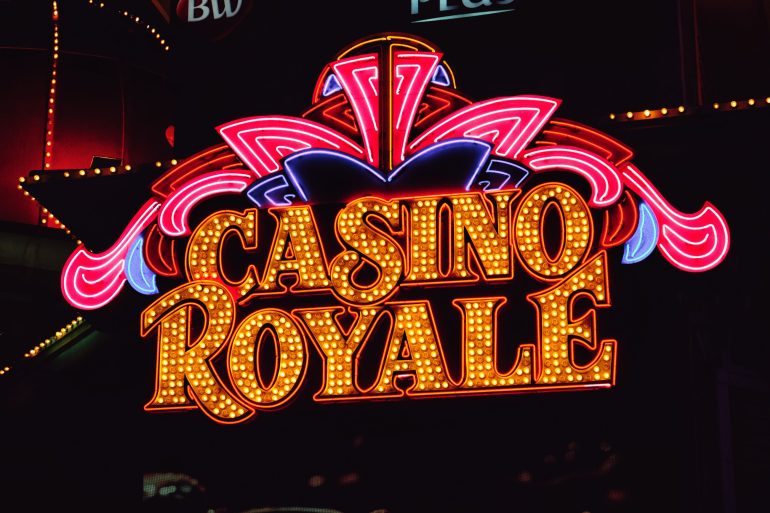
Casino Royale proves that tension does not always need gunfire. Bond and Le Chiffre sit across from each other for long stretches, watching pauses, posture and small changes in expression. The chips keep the consequences visible, but the real contest is psychological. A bet applies pressure. A bluff invites a mistake. Bond cannot chase or shoot his way out of the problem; he has to stay in his chair and understand the man opposite him.
Before returning to the table, he has already survived a stairwell fight and a poisoning attempt. He must then sit down as if neither has affected him, which makes the stillness feel more dangerous than another burst of movement would. The film’s combination of strong performances and physical action works especially well because the poker sequence briefly removes Bond’s usual advantages. The table becomes its own arena.
Luxury makes the damage look better
Casinos are built to project control. Floors shine, staff remain composed and the public areas suggest that nothing unexpected could happen there. Rush Hour 2 enjoys destroying that impression. Decorative fittings, gaming tables and chips become part of the fight, making each impact look more expensive than it would in an alley or warehouse.
Army of the Dead takes another route. Las Vegas has lost its crowds, but the vault remains the prize. The familiar glamour is gone, replaced by zombies, traps and a city facing destruction. Ocean’s Eleven keeps the violence mostly out of sight. Its crew succeeds by protecting the appearance of normality, using the crowd as cover while knowing one wrong move could expose the entire operation.
The geography helps all three films. A conversation at a table can lead into a kitchen, a restricted elevator, a parking garage or a hotel roof without making the story feel as though it has jumped somewhere new. Viewers understand which parts of the building are public and where the characters are not supposed to be. Once the plan collapses, every closed door and security camera becomes another obstacle.
Some rooms were built for the cinema
A 2026 Global Cinema Federation survey found that 70% of respondents were excited to visit cinemas during the year, while around half wanted more action and adventure films on the big screen. Casino action gives that audience something easy to read at full scale: a packed room, a guarded prize and nowhere for the hero to disappear once the plan goes wrong.
Online play may fit inside a pocket, but the movies still want the roulette wheel spinning, the surveillance room watching and the vault door closing one second too soon.